Motor rating and duty factor.
SUS-F savings calculator
Sustainable Gearbox Repair Starts with Measurable Losses
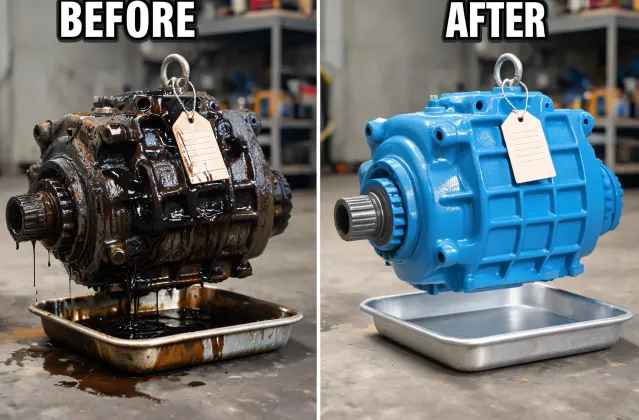
Efficiency in heavy duty transmission is rarely a slogan. It is the result of correct ratio selection, clean lubrication, seal condition, bearing alignment, thermal capacity and a rebuild decision that avoids unnecessary scrap. Flender sustainability content focuses on practical before and after comparisons that a plant engineer can verify. A reducer with oil leakage, elevated bearing temperature or poor shaft alignment consumes maintenance time and can damage adjacent motors, couplings and foundations. A rebuilt or correctly selected gearbox can reduce oil waste, extend service intervals and restore mechanical efficiency without forcing a full line redesign. Savings estimates should always be treated as planning values, because duty cycle, ambient temperature, input kW and operating hours drive the real result. The calculator layout here asks for those values and explains the assumptions instead of hiding them. Case cards describe category level outcomes such as lower lubricant consumption, shorter outage windows and documented reuse of housings. The page closes with a request for real nameplate data so any efficiency claim can be checked before procurement acts.